
Compliance
HIPAA mail: patient documents folded and sealed by machine
The old way to mail patient statements is for someone to print them, fold them, put them in envelopes and seal them. Every page passes through a person's hands and in front of their eyes, and a two-page statement is one distraction away from going out with the wrong second page. That is what the HIPAA question is really about: is your current way of handling patient mail safe?
The alternative is to let the document drive the machine. FlexStream marks each page with a scancode that says which patient it belongs to. A folder inserter reads the code, collects the right pages, folds them and seals them, and a FlexVision camera confirms that what came out matches what went in. The operator loads a stack of paper and unloads sealed envelopes.
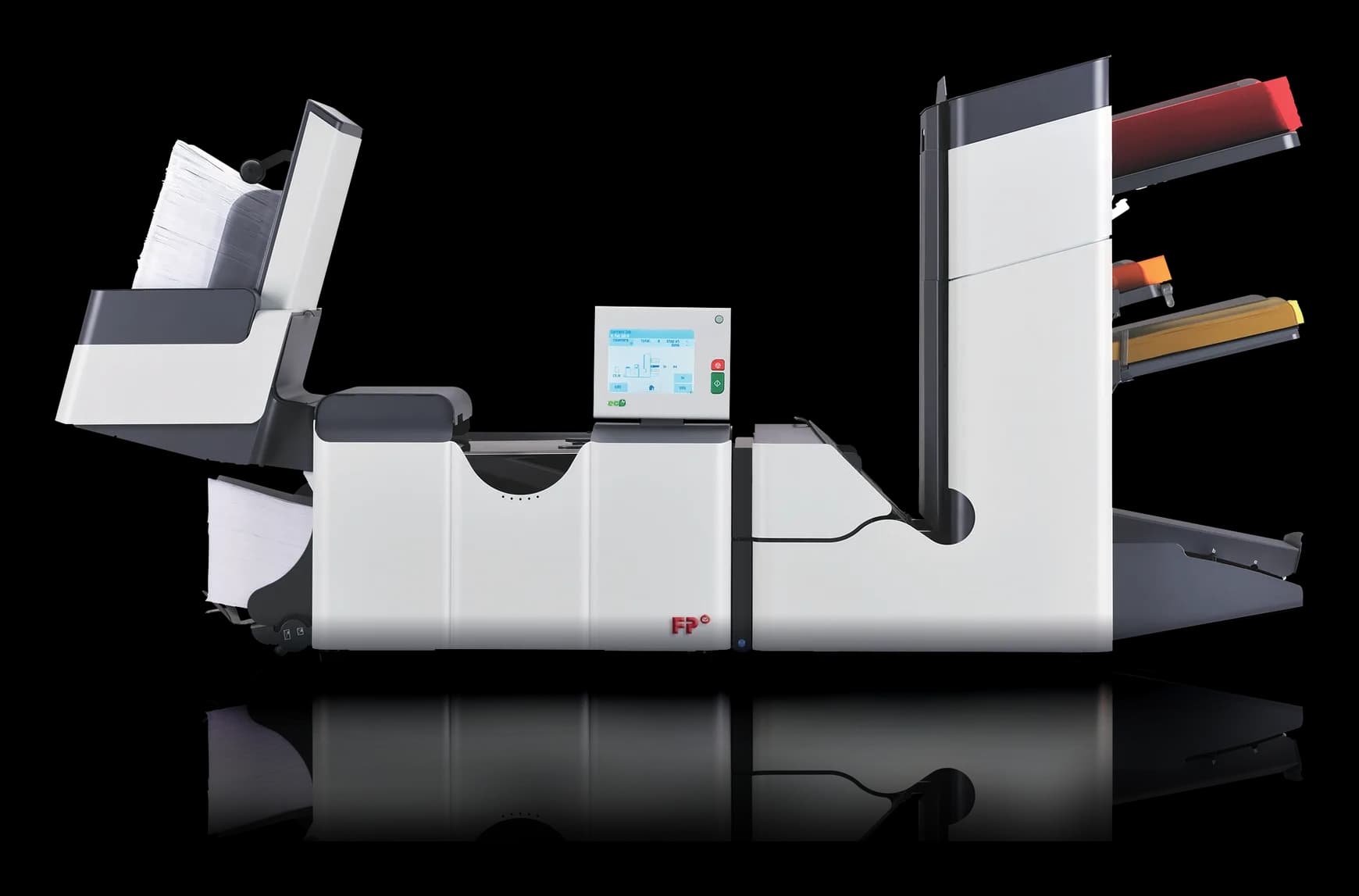
The process, step by step
- Documents. Your practice or billing system prints statements to PDF as it does today. Nothing there changes.
- FlexStream. It finds where each patient's document starts and ends, groups pages for the same recipient, and prints a scancode on each page. It can also add text, graphics or barcodes and convert simplex pages to duplex.
- Printing. The marked pages go to your printer as one run.
- Folding and inserting. An FP folder inserter reads the scancode and knows how many pages belong together. Double-document detection and document feed detection, which measures the thickness and length of what each feeder picks, are designed to stop two patients' pages from sharing an envelope. The machine folds, inserts and seals.
- Verification. FlexVision compares the output with the input, checks off each record as it passes the camera, and can capture an image of the finished piece.
- Metering. The sealed envelopes go through the PostBase, which records each piece to its cost account.
Nobody reads the statement
Once the pages are printed, the only person who handles them is the operator loading the feeder, and what they see is a stack, not a page. Folding, collating, inserting and sealing happen inside the machine. On FP's larger inserters that is up to 4,000 envelopes an hour, which is also the argument for doing it this way even before the privacy case is made.
Output verification
A scancode makes the inserter accurate; a camera makes it provable. FlexVision reads each piece on the way out and matches it to the record FlexStream created on the way in. Missing or faulty pieces are flagged for reprint so the run finishes at 100 percent, documents collated from different feeder stations are checked against each other, and an indexed image of each envelope can be kept as proof it was handled correctly.
The audit trail
FlexStream produces a job summary for every run and a datasheet listing each document and where it went. FlexVision time-stamps records as they pass the reader. If some patients receive documents by secure email instead, FlexStream records when each was sent, delivered and opened, lets you resend or post a document that was not opened, and exports an audit report of everything emailed.
Smaller volumes
A practice sending a few hundred statements a month does not need a production inserter. An FPi 2300 or FPi 2700 folds and inserts up to eight sheets with a load-on-the-fly envelope hopper, and one-piece pressure-sealed mailers take the envelope out of the equation for single-page statements. Tell us your monthly count and we will size it.
Brochures & downloads
Questions we get asked
Does this make my practice HIPAA compliant?
Not by itself, and we do not say it does. HIPAA compliance is a matter of your policies, training and agreements. What this process does is remove the manual folding and stuffing where most mailing mistakes happen and give you a record for every piece. Your compliance officer decides whether that meets your policy; most find it an easier conversation than defending hand-stuffing.
Do we have to change our billing software?
No. FlexStream reads the PDF your billing system already produces and runs independently of it. It finds the breaks between patients from page counts or from data on the page, such as an account number changing.
What if we only send a few hundred pieces a month?
A small FPi folder inserter still reads the scancode and still folds and seals inside the machine. Pressure-sealed one-piece mailers are another option for single-page statements. Volume decides the machine, not the process.
Related
- FlexStream & FlexMailDocument automation for inserters, and variable-data printing for address printers.
- Folder insertersFP FPi 2300 to 5700 for office and departmental mail.
- Pressure sealersOne-piece mailers for checks, statements and grades.
- Certified Mail & ERRElectronic return receipts without the green cards.
Tell us what you send and who regulates it
Healthcare, legal and financial mail each need a different paper trail. Describe the job and we will show you the process, the equipment and the records it produces, then quote it.